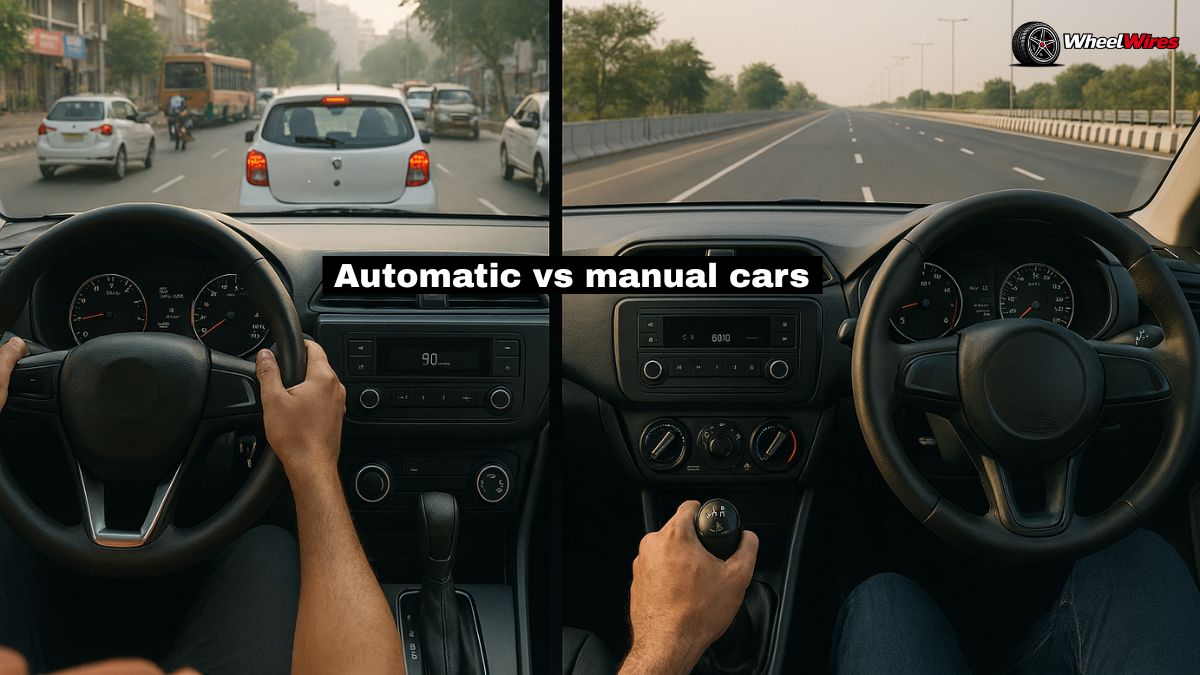
Automatic vs Manual Cars in India:Choosing between an automatic and a manual car is one of the biggest decisions for first-time car buyers in India. With increasing traffic congestion, rising fuel prices, and more automatic options entering the market, buyers are often confused about which transmission makes more sense for Indian roads.
This guide compares automatic vs manual cars in India based on mileage, maintenance cost, city and highway usage, and resale value, helping you decide which option suits your driving needs and budget.
Automatic vs Manual Cars Explained
A manual car requires the driver to change gears using a clutch pedal and gear lever. This setup has been the standard choice in India for decades due to lower cost and better fuel efficiency.
An automatic car changes gears automatically without a clutch pedal. The driver only needs to operate the accelerator and brake, making driving easier and more comfortable, especially in heavy traffic.
In recent years, automatic cars have become more popular due to better technology, improved mileage, and growing urban traffic.
Mileage Comparison: Automatic vs Manual Cars
Mileage is one of the top concerns for Indian car buyers. Traditionally, manual cars delivered better fuel efficiency because they gave drivers more control over gear shifts. However, modern automatic transmissions have significantly closed this gap.
Manual Cars Mileage
-
Generally offer better mileage
-
Ideal for drivers who shift gears efficiently
-
Lower fuel loss due to simpler mechanics
Automatic Cars Mileage
-
Older automatics had lower mileage
-
Newer technologies like AMT, CVT, DCT, and torque converters offer competitive efficiency
-
Mileage difference is now very small (5–10%)
Real-World Verdict
For most modern cars, the mileage difference between automatic and manual versions is minimal. Driving style and traffic conditions matter more than transmission type.
Maintenance Cost: Automatic vs Manual Cars
Maintenance cost plays a major role in long-term ownership.
Manual Cars Maintenance Cost
-
Lower servicing and repair costs
-
Simple mechanical structure
-
Cheaper clutch and gearbox repairs
-
Widely available mechanics
Automatic Cars Maintenance Cost
-
Higher service and repair cost
-
Complex gearbox technology
-
Repairs can be expensive after warranty
-
Requires specialised service centres
Ownership Perspective
Manual cars are easier and cheaper to maintain, especially in smaller towns. Automatic cars cost more to repair but newer models have improved reliability.
City vs Highway Driving: Which Is Better?
Driving conditions in India vary greatly between crowded cities and open highways.
Automatic Cars in City Traffic
-
No clutch usage reduces driver fatigue
-
Easier to drive in stop-and-go traffic
-
Ideal for metro cities like Delhi, Mumbai, and Bengaluru
Manual Cars in City Traffic
-
Frequent clutch use can be tiring
-
Better control but less comfortable in traffic
-
Suitable for experienced drivers
Highway Driving
-
Manual cars offer better control at high speeds
-
Automatics provide smooth cruising
-
Both perform equally well on long drives
Verdict
If your daily driving is mostly in the city, automatic cars offer unmatched comfort. For highway-focused driving, both options work well.
Resale Value: Automatic vs Manual Cars in India
Resale value is an important factor for Indian buyers who plan to upgrade their car in a few years.
Manual Cars Resale Value
-
Higher demand in the used car market
-
Easier to sell in smaller cities
-
Trusted by budget buyers
Automatic Cars Resale Value
-
Growing demand in urban markets
-
Slightly lower resale value in rural areas
-
Premium automatics hold value better
Market Trend
As more buyers shift towards automatic cars, their resale value is improving, especially in metro cities.
Automatic vs Manual Cars Comparison Table
| Factor | Manual Cars | Automatic Cars |
|---|---|---|
| Purchase Price | Lower | Higher |
| Mileage | Slightly better | Comparable |
| Maintenance Cost | Lower | Higher |
| City Driving | Less comfortable | Very comfortable |
| Highway Driving | Excellent control | Smooth and relaxed |
| Ease of Driving | Requires skill | Beginner-friendly |
| Resale Value | Strong | Improving |
Which One Is Better for First-Time Buyers?
The right choice depends on your driving habits and location.
Choose a Manual Car If:
-
You want a lower purchase price
-
Mileage is your top priority
-
You drive mostly on highways
-
You live in a smaller city or town
Choose an Automatic Car If:
-
You drive daily in heavy traffic
-
Comfort and ease matter more
-
You are a beginner driver
-
You live in a metro city
Cost Difference Between Automatic and Manual Cars
On average, automatic cars cost ₹60,000 to ₹1.5 lakh more than their manual counterparts. This price difference varies based on the type of automatic transmission.
-
AMT: Most affordable automatic option
-
CVT & Torque Converter: Balanced performance
-
DCT: Expensive but sporty
Buyers should consider long-term comfort over short-term savings.
Long-Term Ownership Experience
Manual cars are cost-effective and reliable over long ownership periods. Automatic cars offer stress-free driving and improved convenience but require careful maintenance. With better road infrastructure and increasing traffic congestion, automatics are becoming the preferred choice for urban users.
FAQs
Are automatic cars good for Indian roads?
Yes, automatic cars are well-suited for Indian roads, especially in cities with heavy traffic.
Do automatic cars give less mileage than manual?
Modern automatic cars offer mileage very close to manual cars, with only a small difference.
Which is cheaper to maintain, automatic or manual?
Manual cars are cheaper to maintain due to simpler mechanical components.
Is an automatic car good for beginners?
Yes, automatic cars are ideal for beginners as they are easier to drive and reduce stress.
Final Verdict – WheelWires Take
There is no one-size-fits-all answer to the automatic vs manual cars in India debate. Manual cars offer affordability, mileage, and lower maintenance, while automatic cars deliver comfort, convenience, and ease of driving.
For first-time buyers, the decision should be based on daily driving conditions, budget, and personal comfort. In crowded cities, automatics make life easier. In less congested areas, manuals still make perfect sense.