
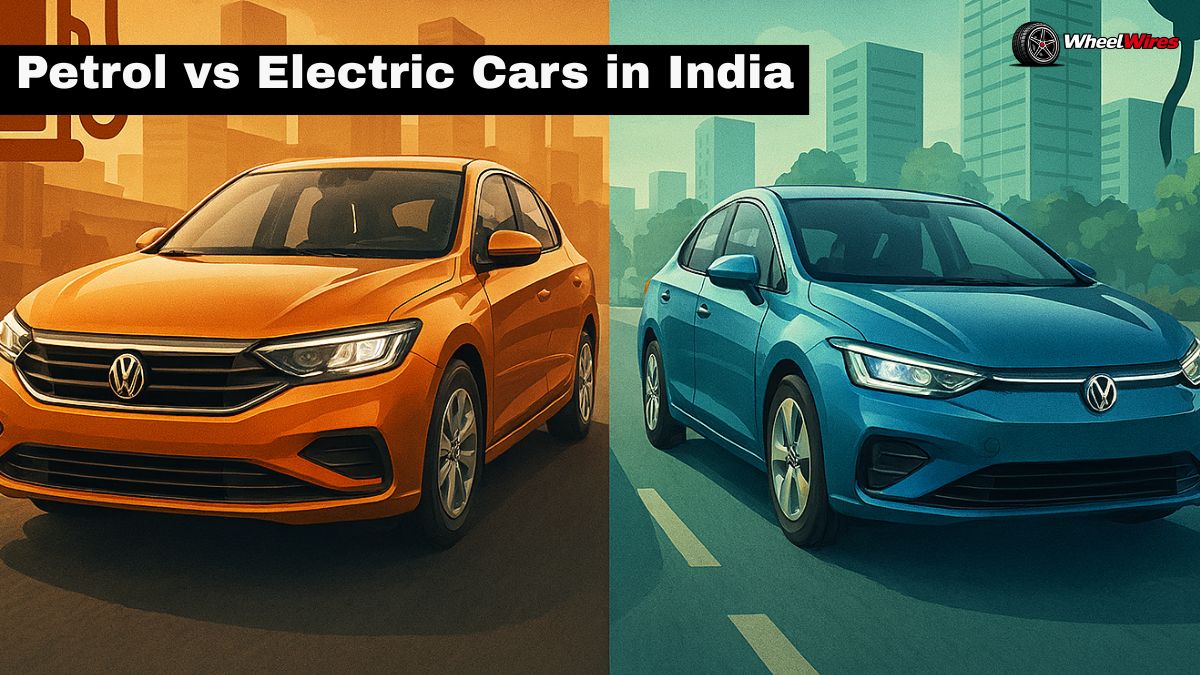
Petrol vs Electric Cars in India: The Indian car market is at a turning point. Petrol cars have been the default choice for decades, but electric cars are now gaining serious attention due to rising fuel prices, government incentives, and increasing awareness about environmental impact. Many buyers today are confused about whether a petrol car still makes sense or if switching to an electric vehicle (EV) is the smarter decision.
This article compares petrol and electric cars in India (Petrol vs Electric Cars in India) based on purchase cost, running expenses, maintenance, environmental impact, and long-term ownership value.
Petrol vs Electric Cars Explained
Petrol cars run on internal combustion engines that burn fuel to generate power. This technology is well-established, widely serviced, and supported by an extensive fuel station network across India.
Electric cars, on the other hand, use a battery and electric motor (Petrol vs Electric Cars in India) to move the vehicle. They do not consume petrol or diesel and produce zero tailpipe emissions. While EV technology is relatively new in India, adoption is increasing rapidly, especially in urban areas.
In simple terms, petrol cars offer familiarity and convenience, while electric cars focus on efficiency, lower running costs, and future sustainability.
Purchase Cost Comparison
When it comes to upfront pricing, petrol cars are generally more affordable. Entry-level petrol hatchbacks start at a much lower price compared to electric cars in the same segment.
Electric vehicles usually cost more due to expensive battery technology. Although central and state government subsidies help reduce the effective price, EVs still remain costlier at the time of purchase.
For buyers with a strict budget (Petrol vs Electric Cars in India) or those purchasing their first car, petrol vehicles often appear to be the more practical option initially.
Running Cost & Mileage
Running cost is where electric cars clearly have an advantage.
A petrol car typically costs around ₹6–8 per kilometre to run, depending on fuel prices and real-world mileage. In contrast, an electric car can run at approximately ₹1–1.5 per kilometre when charged at home.
Even when using public fast chargers, EV running costs are usually lower than petrol cars. For daily city commutes and regular use, electric vehicles offer significant savings over time.
Maintenance & Service Cost
Maintenance is another area where electric cars outperform petrol vehicles.
Petrol cars require regular servicing that includes engine oil changes, air filters, spark plugs, and other mechanical components. Over time, these maintenance costs add up.
Electric cars have fewer moving parts and do not require engine oil, clutch replacements, or exhaust system repairs. As a result, service costs for EVs are typically 30–40 percent lower than petrol cars.
The battery is the most expensive component in an EV, but most manufacturers offer battery warranties of up to eight years, reducing long-term ownership risk.
Environmental Impact
Petrol cars produce carbon emissions and contribute significantly to air pollution, especially in crowded cities.
Electric cars produce zero emissions while driving, making them a cleaner alternative. Although electricity generation may still involve fossil fuels, the overall environmental (Petrol vs Electric Cars in India) impact of EVs remains lower than petrol vehicles. For buyers who are conscious about sustainability and cleaner mobility, electric cars are a more responsible choice.
Long-Term Ownership Value
From a long-term perspective, electric cars are expected to offer better value.
Fuel prices in India are likely to rise further, increasing the cost of running petrol cars. Electricity, on the other hand, remains more affordable and stable. Additionally, government policies continue to support EV adoption through incentives and infrastructure development.
Petrol cars are currently more convenient for long-distance travel, but over the next few years, charging infrastructure is expected to improve significantly, strengthening the case for electric vehicles.
If you plan to own a car for five to eight years, an electric vehicle may deliver better long-term value despite the higher initial cost.
Petrol vs Electric Cars in India:Comparison Table
| Factor | Petrol Cars | Electric Cars (EVs) |
|---|---|---|
| Purchase Price | Lower upfront cost | Higher initial cost |
| Running Cost | ₹6–8 per km | ₹1–1.5 per km |
| Fuel / Energy | Petrol | Electricity |
| Maintenance Cost | Higher (engine, oil, parts) | Lower (fewer moving parts) |
| Service Frequency | Frequent servicing required | Less frequent servicing |
| Driving Range | Long, quick refuelling | Limited, charging needed |
| Environmental Impact | High emissions | Zero tailpipe emissions |
| Ideal Usage | Long drives, highways | City driving, daily commute |
| Long-Term Value | Moderate | High (lower ownership cost) |
Who Should Buy What?
Choose a petrol car if:
-
You frequently travel long distances
-
Charging infrastructure is limited in your area
-
You want a lower upfront purchase price
-
You prefer proven and familiar technology
Choose an electric car if:
-
Your daily driving is mostly within the city
-
You can install a home charging point
-
You want lower running and maintenance costs
-
You are planning for future-ready mobility
FAQs
Is a petrol car cheaper than an electric car?
Petrol cars are cheaper to buy initially, but electric cars can be more cost-effective in the long run due to lower running and maintenance costs.
Are electric cars profitable in the long term?
Yes, for users with high daily usage and (Petrol vs Electric Cars in India) access to home charging, electric cars can be more economical over long-term ownership.
What is the future of EV charging in India?
India’s EV charging infrastructure is expanding rapidly, with new chargers being installed on highways, in cities, and at commercial locations, making EV ownership more practical over time.
ALSO READ- Upcoming Electric Cars in India 2026 – Price, Range Buy or Not